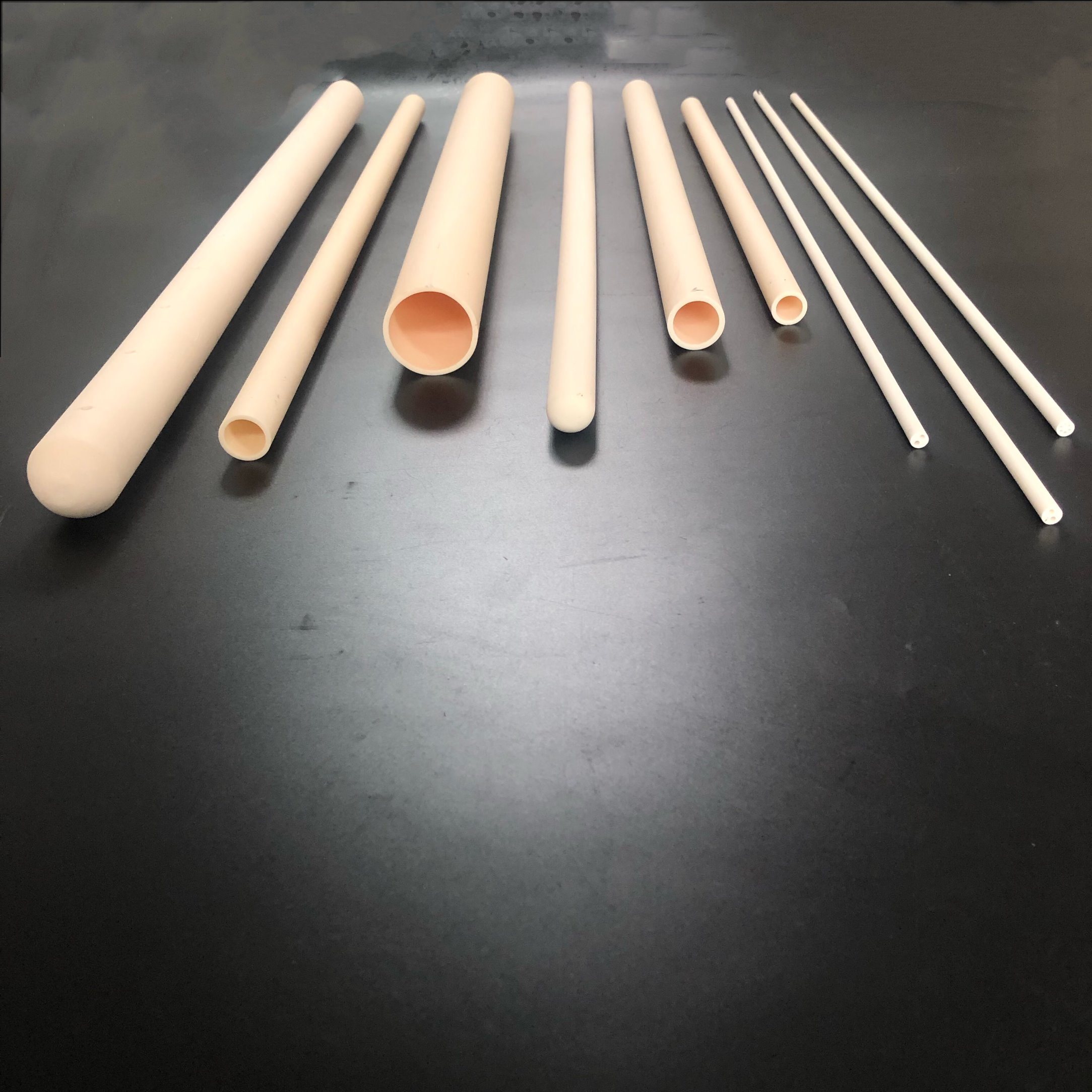
As the global industrial transformation towards high-end and intelligent manufacturing accelerates, thermocouples serve as core components in industrial temperature measurement, and the performance of their protective sleeves directly determines measurement accuracy, equipment safety and service life. Among protective sleeves made of various materials, alumina ceramic tubes have become the first choice for industrial enterprises worldwide by virtue of their core advantages such as high temperature resistance, corrosion resistance and high insulation. They are leading the thermocouple protective sleeve industry to upgrade towards high efficiency, stability and long service life, with the relevant market scale rising steadily.
Thermocouple protection tubes act as a protective barrier that isolates temperature-sensing elements from severe working conditions, and are widely used in high-temperature, corrosive and high-pressure scenarios such as metallurgy, chemical engineering, new energy, semiconductors, and aerospace. In the past, protection tubes made of metals, quartz and other materials could hardly meet the stringent requirements of high-end industry due to performance limitations — metal tubes generally have a maximum temperature resistance of below 800℃ and are prone to erosion by molten metals and corrosive gases; quartz tubes feature low mechanical strength and poor thermal shock resistance, which make them easy to crack in scenarios with drastic temperature changes. Frequent replacement not only increases production costs, but may also disrupt production continuity.
Industry data shows that the global thermocouple protection tube market is growing steadily. The market size of China is expected to exceed 2.5 billion yuan in 2025, with a stable compound annual growth rate of over 12%. Among all products, alumina ceramic tubes account for 68.4% of the domestic market share by virtue of their performance advantages, emerging as the mainstream product in the market.
In terms of application scenarios, alumina ceramic tubes have achieved full industry coverage:
In the metallurgical field, they are used for temperature measurement and protection of equipment such as blast furnaces and converters, helping to improve smelting precision;
In the new energy field, they support the stable operation of photovoltaic monocrystalline furnaces and lithium battery sintering equipment, meeting the high-end development demands of the new energy industry;
In the semiconductor field, the total content of metal impurities can be controlled below 10ppm, complying with the SEMI F57 semiconductor cleanliness standard, and they are applied to temperature measurement and protection of ion implantation equipment and vacuum chambers;
Na área aeroespacial, suas características de leveza (com densidade equivalente a apenas um terço da do aço) e resistência à radiação de raios cósmicos os tornam adequados para cenários de alta tecnologia, como testes em solo de motores de foguete e sensores de satélite.
Especialistas do setor indicam que, com o avanço da Indústria 4.0 e o desenvolvimento de áreas de ponta, como energia de fusão e reatores refrigerados a gás de altíssima temperatura, as exigências quanto à resistência à temperatura, à corrosão e à precisão das capas de proteção de termopares serão ainda maiores. Como opção com o desempenho mais equilibrado e a melhor relação custo-benefício,tubos de cerâmica de aluminaVeremos um aumento sustentado na demanda de mercado, enquanto as tecnologias relevantes alcançarão avanços significativos nas áreas de modificação de nanocompósitos e monitoramento inteligente. Por meio de tecnologias como reforço com fibra de carbono e modificação com dopagem de terras raras, a resistência ao choque térmico e a vida útil dos produtos serão ainda mais aprimoradas; combinadas com sistemas de monitoramento inteligente por IA, será possível o alerta precoce em tempo real do status de serviço dos tubos de cerâmica, impulsionando a transformação das mangas de proteção de termopares de uma proteção passiva para um gerenciamento e controle ativos.
Da indústria tradicional à manufatura de ponta, de equipamentos terrestres à indústria aeroespacial,tubos de cerâmica de aluminaconsolidaram firmemente seu status como a primeira escolha no campo das capas de proteção para termopares, em virtude de seu desempenho robusto. No futuro, com a inovação contínua das tecnologias de materiais e dos processos de fabricação,tubos de cerâmica de aluminairá ultrapassar ainda mais os limites de desempenho, fornecer suporte essencial para o desenvolvimento eficiente, estável e seguro do campo global de medição de temperatura industrial e impulsionar o avanço da manufatura industrial rumo a um desenvolvimento de maior qualidade, mais ecológico e mais inteligente.